The Spin of Strangers: Britain's Quietest Late-Night Theatre
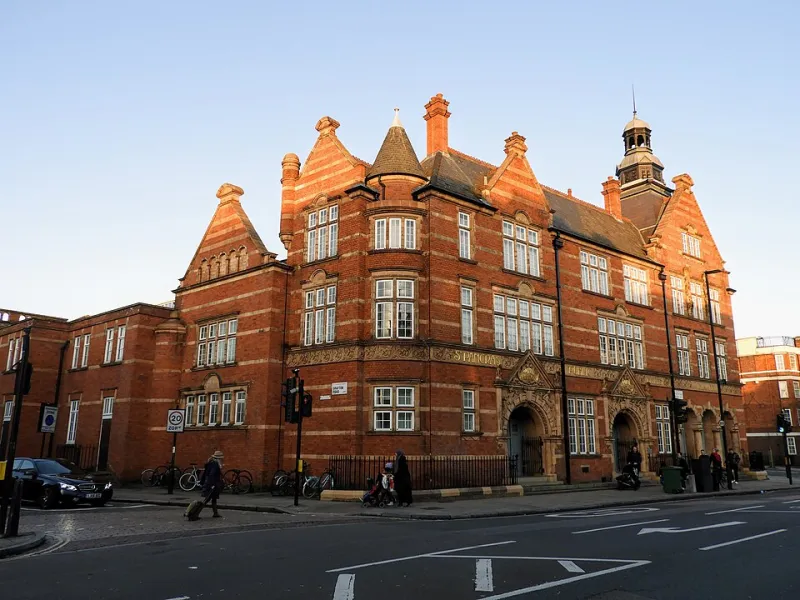
Photo: Reading Tom from Reading, UK, CC BY 2.0, via Wikimedia Commons
One forty in the morning, and the warmest room for half a mile is a launderette. Two-thirds of the machines are turning. A man in a hoodie is asleep upright on a plastic chair, arms folded like someone who has done this before. A woman is reading a paperback with the spine cracked clean through. Somebody's bedding rotates behind the glass in that slow, hypnotic way that bedding does, and the whole place hums on the single note of an old drum at full spin.
Outside: a cashpoint, a chicken shop, a bus stop with a lit advert, nobody.
Inside: heat, chairs, light, a bin, a sink, and an hour and forty minutes of legally doing nothing.
The launderette is one of the last genuinely democratic rooms left in Britain after midnight, and almost nobody has noticed it is going.
There Is No Door Policy
The members' club has a list. The bar has a deposit, a dress code and a minimum spend. Even the pub — that great invented democracy — has a bell, a last orders and a landlord who would rather you were gone by half eleven.
The launderette has a coin slot, and that is the entire vetting process. Five pounds for a wash, a bit more for the drier, and at no point does anybody ask who you are, where you're going afterwards, or why your coat has a rip in the sleeve. No bouncer looks at your shoes. No clipboard on a Saturday. No bartender pretending to be your friend and then adding twelve and a half per cent for the privilege.
You can spend under a tenner and be warm, dry and supervised for two hours. No other room in the country will do that for that money at that hour.
A Democracy of Soiled Linen
The great leveller is that everyone's washing looks pathetic. It simply does. A hot wash strips the last of the mystique off a human being: the socks, the tea towels, the pants, the sheet with the mark on it, the load of towels from a flat where nobody has owned a bath for a decade.
That's the democracy I mean. At two in the morning, in a room with three people and a machine that keeps stopping, you cannot maintain a performance. Everyone's dignity is mildly compromised and everyone has silently agreed not to mention it. There is an etiquette, and the etiquette is quiet.
The Theatre of the Drum
Watching a wash go round is a genuine British pastime and the closest thing we have to a national meditation. A front loader is dolly-zoom cinema. Whites, colours, delicates — you can read a life out of a load. The man with fourteen identical T-shirts. The new parent whose wash is all muslins and tiny socks and one soft toy that went in by accident. The person laundering their entire wardrobe, which means something has gone wrong somewhere.
You don't talk about it. You do it sidelong, through the reflection in the glass, with the reverence other people reserve for the sea.
The Etiquette of the Bench
Regulars know the rules better than any club's. Leave two seats of a gap. Don't take the machine beside the only other person if six are free. Never open anyone's drum, even when the cycle has clearly finished. Never add a stray sock to someone else's load. Speak only to report that a machine is out of order, and do it in the flat, calm tone of a person passing on a motorway warning.
The camera in the corner points at the till and the door and has been there since about 2011. Technically it is surveillance. It is also the least threatening camera in Britain, watching a man sleep and a woman finish a thriller, and it seems — in a strange way — to be on their side. We fret endlessly about being looked at. The launderette suggests there is a version of being looked at that is just being warm and not entirely alone.
Who Is Actually In There
Not who the night-time economy brochures imagine. Taxi drivers between fares. Care workers coming off a late shift with a uniform that has to be clean by seven. Students who have run out of coins and are drying a single hoodie because it is the only thing warm. A man who has clearly been sleeping in a stairwell and has put a wash on to buy two hours of heat and a chair. Nurses. Kitchen porters. Someone's dad, up because he can't sleep, doing a load of towels at three in the morning as a form of therapy.
Nobody is spending twelve pounds on a cocktail. Everybody is spending four pounds fifty on a wash, and the machine does not care who they are.
Why It Is Going
These places are closing and they are not coming back. Business rates, rents, the price of gas, machines that cost five figures to replace, water meters, and a planning system with a strong preference for new-build flats with a washer-drier jammed under the counter. Every year a few more shut, and a closure isn't news, because the only people who notice are the ones who go at two in the morning.
We are told, repeatedly, that London and Manchester and Leeds are night-time cities now, that the night economy is thriving, that the sector is worth some enormous number. That economy is a set of cocktail lists and a queue outside a warehouse. The actual night-time Britain is a woman peeling a wet sheet into a drum while a bus goes past, and it is being quietly shut down to make room for a lease.
Not a Nostalgia Piece
I'm not asking anyone to romanticise a launderette. The floor is dirty, the drier catches your knees through the door, one machine always has a handwritten note on it. What I'm saying is that the room is honest. Bars run on a friendly lie. Clubs definitely do. The launderette has no lie available to tell you. It offers warmth, a chair and the long, slow turning of a stranger's towels, and it asks only for coins you have to go and find.
At two in the morning that is close to a public service. At four, with the rain coming on, it is a sanctuary.
Go while it's still lit.