The Last Train Is a Lie: Britain’s Night Begins After the Timetable Ends
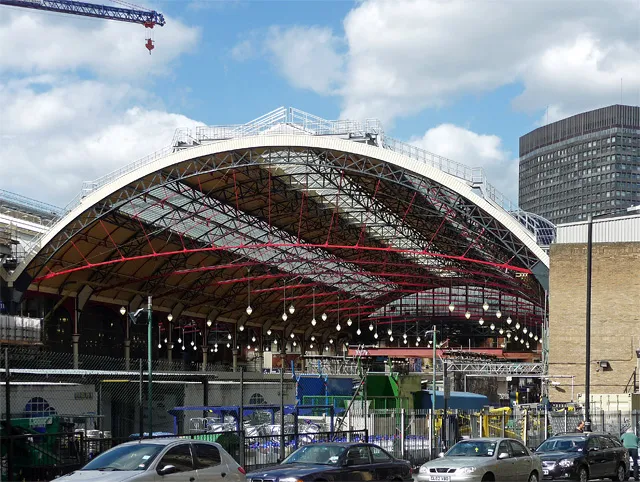
Photo: Stephen Richards , CC BY-SA 2.0, via Wikimedia Commons
It is 23:47 at Piccadilly and the departure board has already started lying. Not in so many words — the 23:52 to Stockport is still listed — but everyone on the platform knows the night has been quietly divided into two groups: people who are going home, and people who are not.
The last train is not the end of the night. It is the moment the night stops pretending to be organised. In 2026, Britain’s after-dark culture is less shaped by licensing committees than by timetable PDFs, taxi algorithms and the question of whether the first bus is at 04:50 or 05:35. The 11:47 club is not a formal membership. It is the loose affiliation of people who have looked at the departure board, done the maths, and decided to stay out anyway.
The timetable is the bouncer
Late licences get the headlines. Transport gets the last word. A city can have venues open until 04:00, but if the last sensible train leaves at 23:30 and the taxi surcharge has just tripled, the effective curfew arrives long before the lights come up.
Manchester makes this plain. The city centre can feel like it is only warming up as the last Northern services drain out towards the suburbs. The queue for the 23:52 is not just a queue; it is a social sorting mechanism. People who live near a tram stop, a bus corridor or a willing friend with a sofa stay. Everyone else performs the familiar ritual: check the app, wince at the multiplier, split a cab, or commit to the awkward gap.
Glasgow has its own rhythm. The subway shuts early enough to make the city feel like it has a bedtime, and the last trains out of Central are a stern reminder that the fun has a postcode problem. Yet the city’s after-hours reputation survives because people adapt. They cluster. They walk. They find the party that is happening within reach of a night bus, a taxi rank or a 24-hour shop.
Bristol is a study in beautiful inconvenience. Temple Meads is not exactly the beating heart of a 3am stroll, and the city’s buses thin out just as the good conversations start. The result is a nightlife that fragments into pockets: harbourside flats, warehouse parties, the friend’s kitchen that becomes a club at 01:00. London, meanwhile, has the Night Tube and still manages to be a patchwork. The spine runs; the capillaries do not. Cross the wrong borough boundary at 02:15 and you are back to surge pricing and hope.
The awkward gap is where the culture lives
The best after-dark culture now happens between last train and first bus. Not because it is convenient, but because it is unplanned. The 00:30 to 04:30 window is where the night loses its corporate sheen and becomes something more interesting: service workers finishing shifts, clubbers refusing to admit defeat, night-shift nurses, delivery riders, people who have missed the last train on purpose.
This is not a romantic argument for suffering. It is an observation about where the texture is. The polished part of the night — the booked table, the headline DJ, the last round ordered before the app closes — is only the overture. The real Britain after dark is in the kebab shop queue, the taxi-rank chat, the petrol-station forecourt and the bus shelter where strangers negotiate a shared journey home.
It is also where the inequalities of the night become obvious. Surge pricing is a tax on poor planning and low wages. A late licence is useless if the only way home costs more than the night out. The 11:47 club is not exclusive by design, but it is exclusive by geography. The further you live from a transport node, the earlier your night ends — or the more it costs to keep it going.
A survival guide for the gap
Staying out past the point of sensible decisions is not a personality trait. It is a logistical exercise. Treat it like one.
Know your first bus before you know your last drink. The first bus is the true finish line. Check the route, the stop and whether it actually runs on a Sunday. A 04:50 service is a lifeline; a 06:10 service is a punishment.
Pre-book the taxi or accept the walk. Surge pricing rewards preparation and punishes panic. If you are splitting a cab, agree the split before you get in. If you are walking, know the route and keep to lit, busy roads. Do not test a shortcut you have never taken in daylight.
Carry cash. Not every late-night institution has a card reader that works, and some of the best ones prefer the older system. A tenner in your pocket is a small insurance policy against the 03:00 card-machine shrug.
Eat before you are desperate. The 02:00 meal is a public service. The 04:00 meal is a medical event. Find the kebab counter, the noodle shop, the bakery hatch — whatever is open — and eat while you can still taste it.
Charge your phone. Bring a layer. Know where the toilets are. These are not glamorous instructions, but glamour is not what keeps you moving between the last train and the first bus. Warmth, battery and a vague sense of direction are.
And respect the people who are working. The night bus driver, the taxi dispatcher, the person behind the counter at the 24-hour shop — they are not part of the scenery. They are the infrastructure. The 11:47 club only exists because they do.
The last train will leave. The night does not have to. Britain’s best after-dark culture is not the bit that is advertised. It is the bit that happens after the timetable gives up, in the awkward gap where the city belongs to whoever is still awake.