Signs of Affection: Britain’s 2AM Arrivals Hall
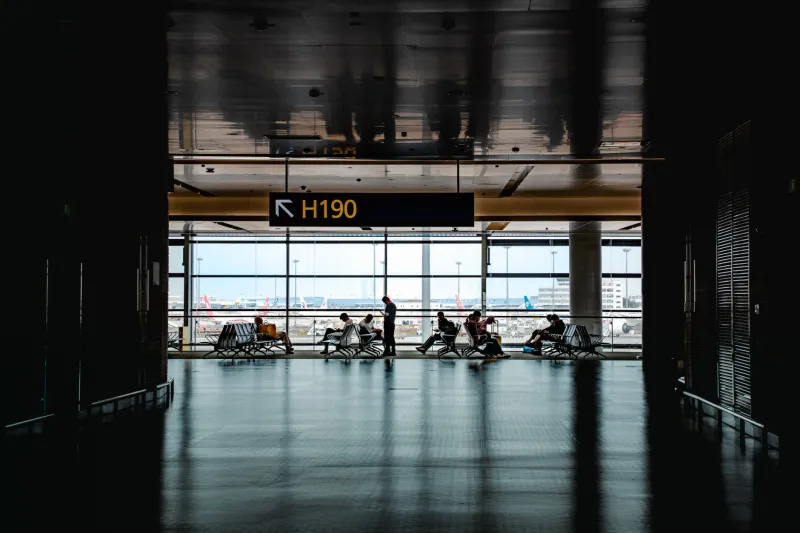
The arrivals board at Terminal 5 says LANDED. It has said LANDED for twenty-two minutes. Nobody has come through the doors. The Costa shutter is down. The vending machine coffee is £3.20 and tastes like a warm penny. A man in a fleece holds a sign that reads WELCOME HOME, KAREN in marker pen that has bled at the edges. A woman in a puffer jacket clutches a bunch of garage flowers. A taxi driver called Terry holds a card for MR SINGH and checks his phone every nine seconds. A toddler sleeps across three seats, mouth open, a stuffed rabbit under one arm.
This is the 2AM arrivals hall. It is not glamorous. It is not efficient. But it is one of the last unscripted rooms in Britain.
The Theatre of Waiting
Everyone here is an actor in a play with no script. The pacing. The checking of phones. The fake casual lean against the barrier. The way a person walks to the doors, peers through the glass, sees nothing, and walks back to the same spot. The arrivals hall is a place where you can be nervous without explaining yourself. You can hold a sign. You can hold flowers. You can hold your phone like a prayer book. Nobody asks why you are here. The answer is obvious.
The floor is polished to a dull shine. The fluorescent lights make everyone look slightly ill. A security guard stands by the exit, not doing much, watching the doors with the patience of someone who has seen every kind of reunion and every kind of anti-climax.
The Anti-Climax Is Part of the Ritual
The doors slide open. A man in a hoodie appears. He is not Karen. He is a stranger looking for the taxi rank. The sign-holder deflates. The woman with the flowers shifts her weight. Terry the taxi driver puts his phone away and then takes it out again. The board says LANDED. The bags are slow. The walk from the gate is long. The passport queue is a rumour. This is the anti-climax, and it is part of the ritual. It makes the eventual arrival feel like a small miracle.
Nobody complains loudly. This is Britain, after all. People sigh. They re-read the board. They buy another stale coffee. They make a joke to the person next to them about the state of the baggage carousel. The arrivals hall is a place where we are allowed to need each other, but we are still British about it.
The Hug
Then Karen appears. She is tired. Her hair is flat. She is dragging a suitcase with a broken wheel. The man with the sign doesn’t wave. He just drops the sign. They hug. It is not a polite hug. It is a full-body, eyes-closed, swaying hug. For a moment, Britain’s reserve is suspended. A woman nearby looks away, then looks back. A security guard pretends not to smile. The toddler wakes up and asks if they can go home now.
This is the moment the arrivals hall exists for. Not the sign. Not the coffee. Not the polished floor. The hug. The awkward, honest, unscripted hug. It is the opposite of a stiff upper lip. It is the upper lip trembling, held up for everyone to see.
What the Signs Say
Some signs are funny. WELCOME BACK, DAD — THE WIFI IS STILL BROKEN. Some are misspelled. Some are just a name on a piece of A4, held by someone who ran out of time and ideas. But each one is a small declaration: I came. I waited. I am still here.
The signs are a confession of hope. They say that despite the delays, despite the last train, despite the £70 taxi home, someone decided that this person was worth the wait. In a country that often struggles to say how it feels, a cardboard sign is practically a sonnet.
When the Timetable Slips
Flights are late. Bags are slower. The last Piccadilly line train has gone. The only way home is a taxi or a friend who owes you a favour. In the arrivals hall, nobody complains loudly. They just sigh, re-read the board, buy another stale coffee. This is Britain at its most patient and its most sardonic. The timetable has slipped, and so has the mask.
At 2AM, the arrivals hall is not glamorous. The floor is polished to a dull shine. The coffee is a war crime. But it is honest. It is a room full of people who have chosen to wait. The doors slide open again. Another stranger. Another sign. Another chance to drop the act.
After dark, before sense.