The Foyer Doesn’t Cash Out: Britain’s Casino Thresholds at 3AM
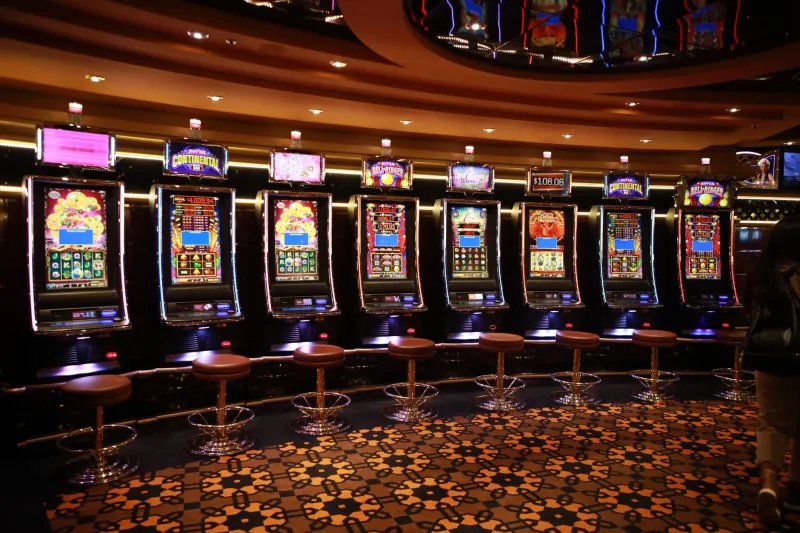
At 3am, a casino does not close so much as lose its argument. The lights still hum. The machines still blink their patient little promises. But the room has thinned to its hard core: the last few players, the staff who have stopped checking the clock, and the foyer, which has quietly become the most honest part of the building.
The foyer is where the night changes clothes. Inside, everything is designed to keep you in. Outside, the street is wet, the rank is empty, and the first bus of the morning is still a rumour. The threshold between the two is not a door. It is a mood.
The Carpet Is a Ledger
Casino carpet is designed to be looked at and not read. Swirls, medallions, deep reds and golds, patterns busy enough to hide a dropped chip, a scuff, a tear, the ghost of a spilled drink. It is not décor. It is a ledger.
By 3am, the ledger is full. You can see the route people have taken: the worn line from the cash desk to the door, the darker patch by the cloakroom hatch, the place where someone stood for eleven minutes pretending to check their phone. The carpet absorbs all of it and says nothing. It has the patience of a witness who has been paid to forget.
You can tell an exit by the way someone crosses it. A confident stride means the decision was made upstairs, in the lift, in the mirror. A slow walk means the decision is still being negotiated with the legs. A stop in the middle of the carpet means the person has remembered something — a coat, a friend, a tenner, a reason to stay.
Mirrors and the Business of Leaving
Foyers are built around mirrors because leaving is a public act. You check your face before you step into the street. You rehearse a story into the glass. You straighten a collar, wipe an eye, put on the expression you will wear for the taxi driver.
The mirror does not judge. It edits. It shows you the version of yourself that is about to be seen by the night bus, the kebab shop, the person waiting up at home. In the foyer, under the low gold light, everyone is briefly in costume. The gambling floor had its own performance. This is the after-party for the face.
Staff move through the foyer with the calm of people who have seen every version of 3am. A door supervisor checks the glass out of habit. A bar worker on a break eats crisps from a bag folded into a neat triangle. A cleaner works the edges of the carpet with a machine that sounds like distant applause. No one is in a hurry. The foyer is a green room for the end of the night.
The Cloakroom Confessional
Coat check at 3am is not really about coats. It is a hatch, a ticket, a small transaction that gives people an excuse to linger. They hand over a bag. They ask for directions they do not need. They stand a little too long, as if the cloakroom might offer an answer.
It is a confessional without a priest. You hear things near the hatch: 'I'm not going back in.' 'I'll just get some air.' 'Is the rank still outside?' 'I think I've lost my card.' 'No, I'm fine. I'm waiting for someone.' The last one is almost never true.
The cloakroom staff — when there is one, and at 3am there often isn't — become accidental therapists. They nod. They hand back a coat. They do not ask follow-up questions. The foyer permits this. It is built for people who are not ready to be asked anything.
A Short Taxonomy of Exits
The Sudden Exit. This person stands, checks their phone, and is gone before the door has finished sighing. They decided in the lift. They may have decided on the escalator. They will not be back tonight. The carpet barely registers them.
The Cigarette Exit. Smokers gather outside in coats and short sleeves, depending on the season. The foyer extends to the pavement. For five minutes, the threshold is a social club. Then someone stubs out a cigarette, says 'right', and the group dissolves back into the building or into the night.
The Staff-Break Exit. Door staff and bar staff slip out for air, phone calls, a quiet cigarette. The foyer becomes a staff room with better lighting. They talk about rota changes, the last customer, the weather. Their exits are the most practised and the least dramatic.
The Taxi Hover. This person has booked a cab and now stands at the glass, watching for it, hoping it takes longer. They refresh the app. They look at the rank. They look at their shoes. They are not ready to go home, but they are ready to stop pretending they are staying.
The Re-entry. This person leaves, stands outside, then comes back for a coat, a friend, a last machine. The foyer permits this. It is built for U-turns. The carpet has seen it all before.
Waiting for a Cab You Don’t Want
The taxi is the final table game. You order it, watch the little car crawl across the map, and calculate how much of your life you are willing to spend in a foyer. The app says four minutes. The foyer says otherwise.
There is a particular kind of honesty that arrives with the headlights. You get in. You give an address. You say 'busy tonight?' and the driver says something about the weather. The foyer recedes. The carpet keeps what you left: a ticket, a receipt, a version of yourself that almost said something true.
By 3.30am, the foyer is quiet again. The mirrors hold the light. The carpet holds the evidence. The door keeps opening and closing, opening and closing, like a sentence that cannot decide how to end.