The Engine Keeps Its Own Counsel: Britain’s Car Parks After Midnight
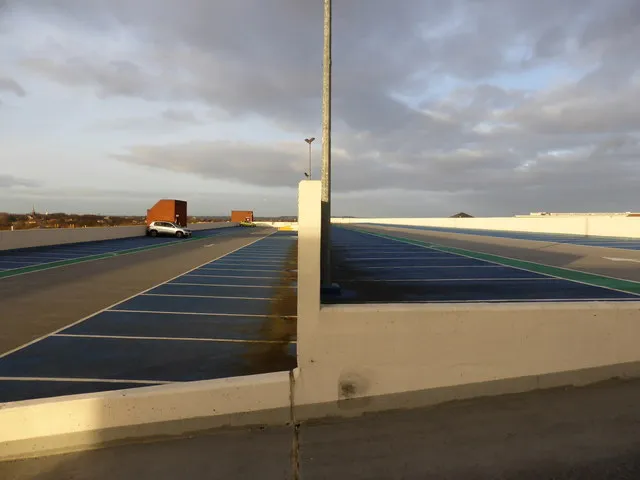
Photo: Chris Allen , CC BY-SA 2.0, via Wikimedia Commons
At 3am, a multistorey car park stops pretending. The ticket machine still glows. The barrier still waits. The ramps still spiral upward like a thought you cannot finish. But the purpose has drained out of the place. No one is shopping. No one is catching a train. On level four, a hatchback sits with its engine running and its driver staring at nothing in particular. This is not parking. It is pausing with the handbrake on.
Britain has plenty of these concrete cathedrals. Council car parks in Leeds, NCP towers in Birmingham, seaside decks in Brighton and Blackpool, the anonymous slabs beside shopping centres in Bristol and Manchester. By day they are functional, slightly hostile, smelling of diesel and wet stairwells. By night they become something else: a private room with public address. The CCTV watches, but it does not ask.
The Architecture of Not Going Home
A car park after midnight is a study in suspended intention. The signage still points to exits. The painted arrows still insist on direction. But the people parked on the top decks are not following any of it. They have found a bay and switched off the headlights, or left the engine ticking over for the warmth. The radio murmurs. The phone screen lights a face for a second and then goes dark.
You do not need a reason to be there, which is precisely why people bring one. The night shift is the most common. A nurse in scrubs, a hospitality worker still smelling of fryer oil, a delivery driver with a flask and a phone charger. They are not ready to go home yet. Home means questions, or silence, or the sudden demand to be a person again. The car park asks nothing. It gives them twenty minutes of decompression between the job and the door.
The engine is an alibi. If it is running, you are technically about to leave. If it is off, you are technically resting. Either way, you are not loitering. You are a motorist. That distinction matters in a country where sitting alone in public can feel like an admission.
Neutral Ground, Yellow Light
There is a particular honesty to a car park at 3am. The streets outside have an audience. There are smokers outside clubs, taxi drivers watching the kerb, late revellers weaving home, cameras on every corner. The street is a stage. The car park is a green room.
Couples come here to argue because the flat is too small and the pub is too public. The neutral floor of level three offers no sofa to storm off to and no bartender to perform for. A conversation can happen in a parked car that would be impossible in a kitchen. One person stares through the windscreen. The other stares at the glovebox. The concrete holds the silence better than plasterboard ever could.
Others come alone. Grief has a way of making bedrooms unbearable. A car in an empty car park is a place to cry without an audience, then check your face in the rear-view mirror and drive home as if nothing happened. The yellow light is unflattering, but it is steady. It does not flicker with sympathy.
The Etiquette of Empty Levels
There are rules, even here. You do not park directly beside the only other car on the deck. You leave a bay or two. You do not stare. If someone is sitting with their engine running, you let them sit. The car park is not a community centre. It is a shared secret with no obligation to speak.
Some people eat. Some people listen to the radio. Some people sleep for exactly forty minutes because the meter is not running and the morning is a long way off. The plastic coffee cup goes on the dashboard. The coat becomes a blanket. The seat reclines an inch. It is not comfort, exactly. It is permission.
On the lower levels, the lighting is brighter and the stairwells echo. Higher up, the wind gets in through the open sides and the town looks like a circuit board. You can see the lit windows of people who are still awake, and the dark windows of people who are not. From here, the whole place seems manageable. Down there, it is just streets again.
What the Ramp Hears
The spiral ramp is the car park’s confessional booth. Cars come down it slowly, one headlight turning then the other. You hear the tyre squeak, the indicator tick, the brief roar as someone accelerates into the exit. The sound carries. Everything carries in a concrete box.
By 3am the traffic is mostly taxis and night workers and the occasional boy racer who has misjudged the hour. They come for the emptiness, or the view, or the feeling of being above the town without leaving it. The car park does not judge the reason. It simply holds the space. The ticket machine may have a sign about maximum stay, but no one is counting the minutes between one thought and the next.
The Walk Back to the Stairwell
Eventually, the engine turns over and the headlights come on. The car reverses out of its bay. The driver does up their seatbelt and adjusts the mirror. The fourth floor goes back to being a floor. The yellow light continues to hum. The machine still waits for a ticket that nobody is going to buy.
Britain’s car parks are not beautiful, and they are not meant to be. But at 3am they offer something the street cannot: a place to stop without explaining yourself. The engine keeps its own counsel. The concrete keeps the rest.